
Shop by CategoryAll 431 products →
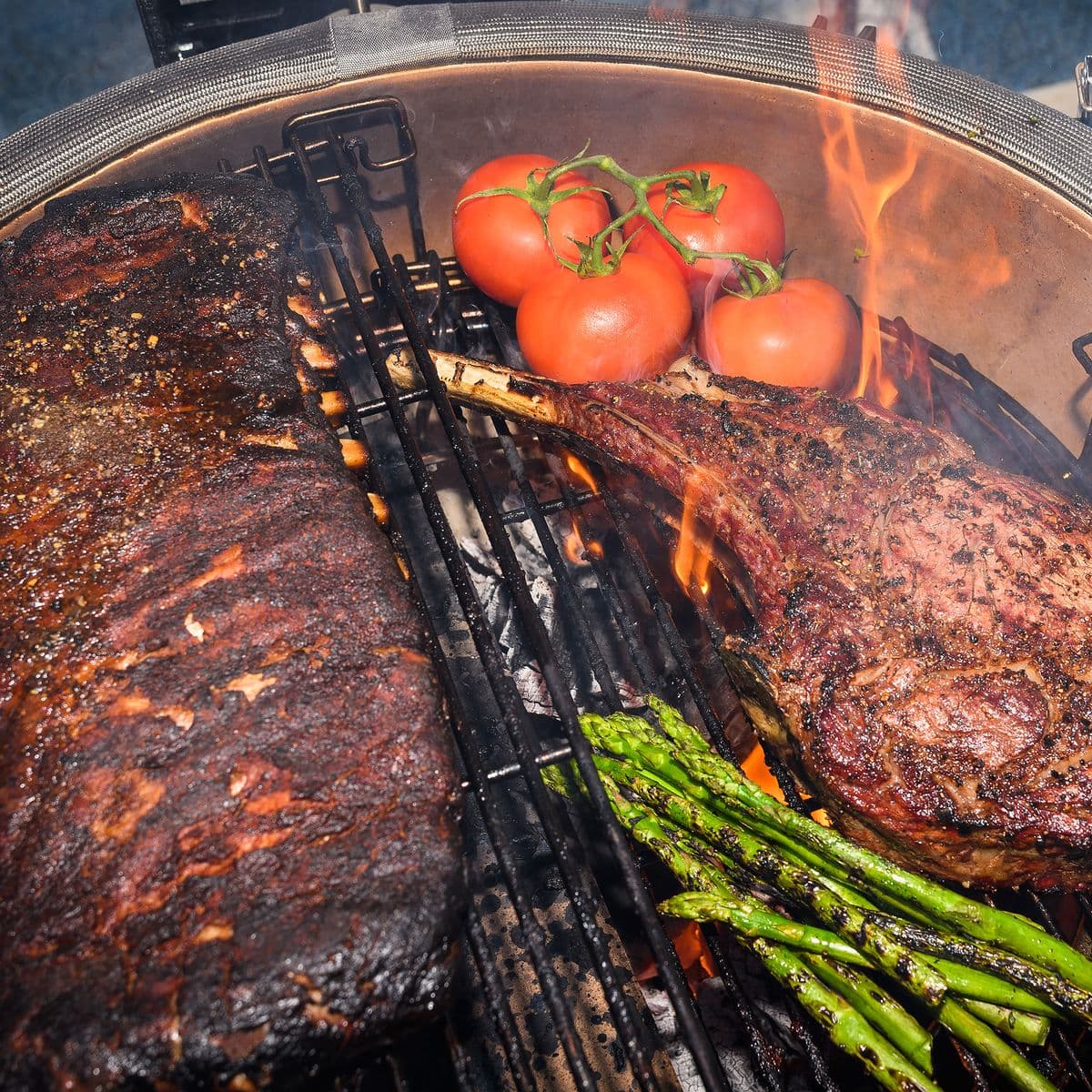
The reverse sear method delivers edge-to-edge perfection on thick steaks. Learn how to nail it on a Kamado Joe — from choosing the right cut and setting up two-zone cooking to the final sear.
The reverse sear is the single best technique for cooking a thick steak. Forget everything you've done before with a hot grill and a race against time. This method flips the script completely.
Instead of searing first and hoping the middle isn't overdone, you start low and slow. The steak cooks gently at a low temperature until it reaches exactly the doneness you want—edge to edge, perfectly pink for medium-rare. Then, when the meat is exactly where it needs to be, you crank the heat to maximum and give it a devastating blast of high heat for just 45–60 seconds per side. The result? A thick, restaurant-quality crust combined with a tender, evenly cooked interior. No more grey band around a pink center. No more guessing.
A Kamado Joe makes this technique almost foolproof because it holds temperature like nothing else on the market. You set it to 110°C and it stays there. Rock solid. That's what makes reverse searing shine.
Thin steaks won't work for this method—they'll overcook in the low phase before you get any benefit. You need thickness. 3cm minimum, ideally thicker.
| Product | Price | Best For |
|---|---|---|
| Angus Pure Scotch Fillet | $64.99/kg | All-rounder, great marbling |
| Angus Pure Eye Fillet | $89.99/kg | Tender, leaner cut |
| Angus Pure Porterhouse | $49.99/kg | Best value, two cuts in one |
| Black Onyx Rump MB3+ | $34.99/kg | Budget-friendly, still quality |
| Bass Strait Scotch Fillet MB3+ | $54.99/kg | Excellent local option |
| Black Onyx Rib Eye | $64.99/kg | Ultimate flavour |
Go thick. A 400g steak should be at least 3.5cm. The extra thickness is what makes reverse searing worth your time.
This is where simplicity shines. Quality meat doesn't need much.
One hour before cooking: Season both sides generously with sea salt and cracked pepper. Not a light dusting—be generous. Let the salt sit on the meat; it'll penetrate and season right through.
30 minutes before cooking: Take the steak out of the fridge. You want it at room temperature before it hits the Kamado. A cold steak in a hot Kamado creates a temperature gradient that works against you. Room temperature lets it cook evenly.
That's it. No marinades needed when you're working with quality beef like Angus Pure or Black Onyx. The meat speaks for itself.
Get your Kamado Joe Classic Joe III ($2,699) set up with indirect heat.
Temperature: 110°C. Not a typo. This is low.
Setup: Place your deflector plates in position to create indirect heat. You want the heat circulating around the steak, not blasting it directly. The Kamado's design makes this easy—drop the plates in and you're good to go.
Fuel: Kamado Joe Big Block Charcoal ($64.95 per bag) burns clean and hot. One bag will last you through multiple cooks.
Cooking: Place the steak on the grate, close the dome, and walk away. This is the beauty of a Kamado—it's not fussy. Every 10 minutes or so, take a peek and check the meat thermometer. You're aiming for 50°C internal temperature for medium-rare.
Depending on thickness:
Don't eyeball it. Use a meat thermometer. Seriously. If you get this wrong, you've wasted good beef. A cheap thermometer costs $15. Do it properly.
When your steak hits 50°C, it's time for the main event.
Remove the steak from the Kamado and set it aside on a clean plate.
Crank it up: Open the vents fully. Remove the deflector plates. Close the dome and let it rip. You're aiming for 300°C+. A Kamado gets there fast—maybe 5–10 minutes. Check with an internal thermometer if you have one; the dome thermometer will lag behind.
Sear aggressively: Place the steak directly on the hot grate. 45–60 seconds per side. Don't fiddle with it. Let it sit. You want a deep brown, crusty exterior. If it looks pale, give it another 15 seconds. You're not cooking the meat through—it's already cooked. You're building flavour and texture.
Flip once. Sear the other side. Done.
Pull the steak off and let it rest for 5 minutes on a clean plate. During these five minutes, the meat relaxes and the juices redistribute. Cut into it too early and those juices run all over the plate instead of staying in the meat.
To serve: If you've got a sharing cut (like a Porterhouse), slice against the grain. This breaks up the muscle fibres and makes every bite more tender. Individual steaks can go straight to plate.
Sides that work: A crisp green salad dressed with lemon and olive oil. Fresh chimichurri if you've got herbs. That's it. Don't bury quality beef under heavy sides.
The reverse sear isn't complicated. It's methodical. Low temperature, accurate thermometer, then heat. That's the formula. Once you nail it once, you'll never cook a thick steak any other way.
Your Kamado Joe is the perfect tool for this technique because it holds temperature without fussing. Invest in a good thermometer, season boldly, and you're golden.
Shop Premium Beef — Find the perfect cut for your next cook.
Shop Kamado Joe — Everything you need to master this technique.
How to Smoke a Brisket — Low and slow taken to another level.
Kamado Joe vs Big Green Egg — Which one's right for you?
Cook guides by BBQ Licious — Australian Bellarine Spit Hire. Quality beef, quality equipment, quality results.